 VapeWholesaleHub
Jasmine Ice Negotiation Timing Through the Production Year — Specialist Vape Shops
Retailers rarely lose money on jasmine ice because of price. They lose money because the first container was bought on a photograph. This page walks through what actually matters when you source jasmine ice at scale, written from the buying desk rather than the marketing department.
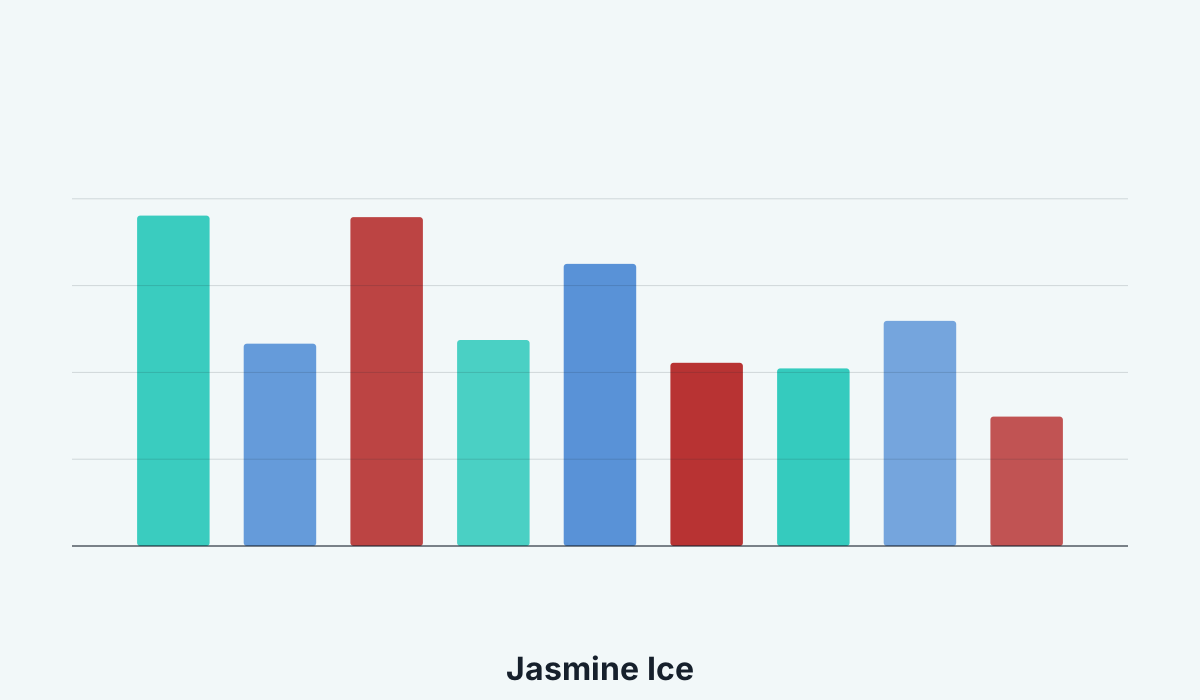
Selling Jasmine Ice at Store Level
A jasmine ice display that answers strength and flavour without staff involvement outsells a prettier one that does not. Most customers will not ask, so the fixture has to do the work.
How Jasmine Ice Fits the Assortment
A tight jasmine ice range with deep availability usually outsells a wide range with thin stock. Customers who find their line in stock come back; customers who are told to wait do not.
Jasmine Ice rewards retailers who can explain it in one sentence. If your team needs a paragraph, the range is too complicated for the space it occupies.
Modelling a Healthy Margin
When jasmine ice input costs move, ask which component moved. A generic price increase hides whether you are paying for cells, packaging or simply a busy production calendar.
Indicative reference points for planning purposes: entry tier from USD 1.48 per unit at 2000 units, mid tier at USD 1.29, and volume tier at USD 1.42 for full container quantities. These figures move with specification, packaging and freight, so treat them as a shape rather than a quote.
Reading a Jasmine Ice Spec Sheet
Specification sheets are where a jasmine ice deal is won or quietly lost. Two samples can look and taste the same while using different coil wire, different wicking density and different tolerances on the mouthpiece. Those details decide how the unit behaves in week three rather than minute three.
When we write a jasmine ice specification with a distributor, we fix four things first: the resistance band, the liquid capacity tolerance, the puff count methodology and the packaging master carton. Everything else can flex without changing the customer experience.
| Product category | Closed pod |
|---|---|
| Resistance band | 0.6 - 0.8 ohm |
| Capacity tolerance | +/- 3% |
| Puff count method | Machine cycle 2s on / 18s off |
| Master carton | 400 units |
| Carton weight | 4.6 kg |
| Shelf life | 12 months |
| Storage | 15-25 C, dry, away from direct light |
Trends Worth Watching
Flavour cycles in jasmine ice are shortening, which argues for smaller test orders and faster feedback loops rather than large speculative buys on a predicted winner.
One visible change in jasmine ice is the move towards clearer labelling and traceability. Retailers who adopted batch coding early are finding it much easier to work with larger distributors now.
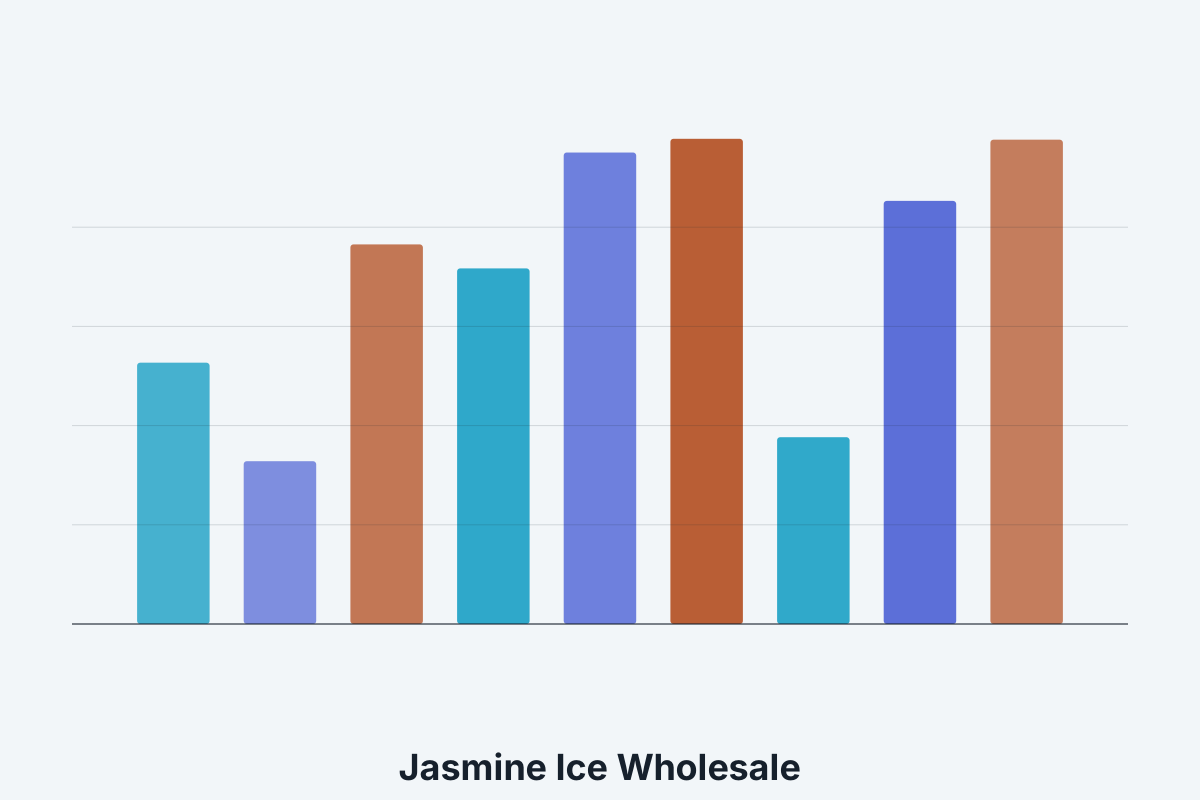
Inspection Before Dispatch
Set the jasmine ice complaint threshold in the contract before you need it. Deciding what counts as an acceptable defect rate during a dispute is the worst possible time to negotiate it.
Train whoever receives jasmine ice cartons to note anything unusual at the point of unloading. Damage discovered at the dock is a freight claim; damage discovered a week later is your problem.
- Rotate stock by batch code rather than by delivery date.
- Plan the switch from air to sea freight before you need it.
- Model landed cost, not ex-works price, when comparing quotes.
- Agree the tolerance band in writing before approving artwork.
- Check carton dimensions against your freight quote before confirming.
Practical Checklist
- Start with a mixed carton and let your own sell-through decide.
- Rotate stock by batch code rather than by delivery date.
- Check carton dimensions against your freight quote before confirming.
- Write the complaint threshold into the order terms.
- Confirm the current customs classification with your own broker.
- Ask how the factory measures puff count, then compare like with like.
Frequently Asked Questions
Do you provide compliance documents?
Every shipment leaves with the documentation set relevant to your market, including batch records and test reports where required. Your local rules still determine what you must file, so confirm those with your broker before import.
What if a batch does not match the sample?
Keep the retained samples from the approval stage. If a delivered batch measurably differs, we compare against the retained set and resolve it against the production record. This is why we insist on sealed retained units from every run.
What if I only need a small first order?
That is normal and sensible. A mixed carton lets you test jasmine ice in your own market before committing to a production run, and the specification you approve at that stage carries through to larger orders unchanged.
How are price changes handled on repeat orders?
{K} pricing is reviewed against input costs and volume rather than adjusted casually. Any change is confirmed in writing before the next order is scheduled, with the reason stated so you can judge it yourself.
What happens if my market changes its rules?
Regulations move, and packaging or documentation sometimes has to follow. We keep approved artwork files on hand so that a required change is a reprint rather than a redesign, which keeps the cost and delay down.
Next Step
We would rather quote you accurately and lose the order than quote optimistically and lose the relationship. Ask us the awkward questions early.
Related Reading
- Private Label Jasmine Ice: Steps From Idea to Carton — Regional Distributors
- Jasmine Ice Inventory Turnover Benchmarks for Stores — Online Sellers
- Jasmine Ice Colour Matching Across Production Runs — Warehouse Teams
- Jasmine Ice Component Sourcing Behind the Finished Unit — Retail Chains
- Jasmine Ice Safety Stock Levels for Import Programmes — Regional Distributors
- Jasmine Ice Component Sourcing Behind the Finished Unit — First-Time Importers