 VapeWholesaleHub
Jasmine Ice Product Listings That Actually Convert — Retail Chains
The most expensive jasmine ice mistake is not paying too much per unit. It is discovering after three months that the line cannot be reordered to the same standard. Consistency is the actual product.
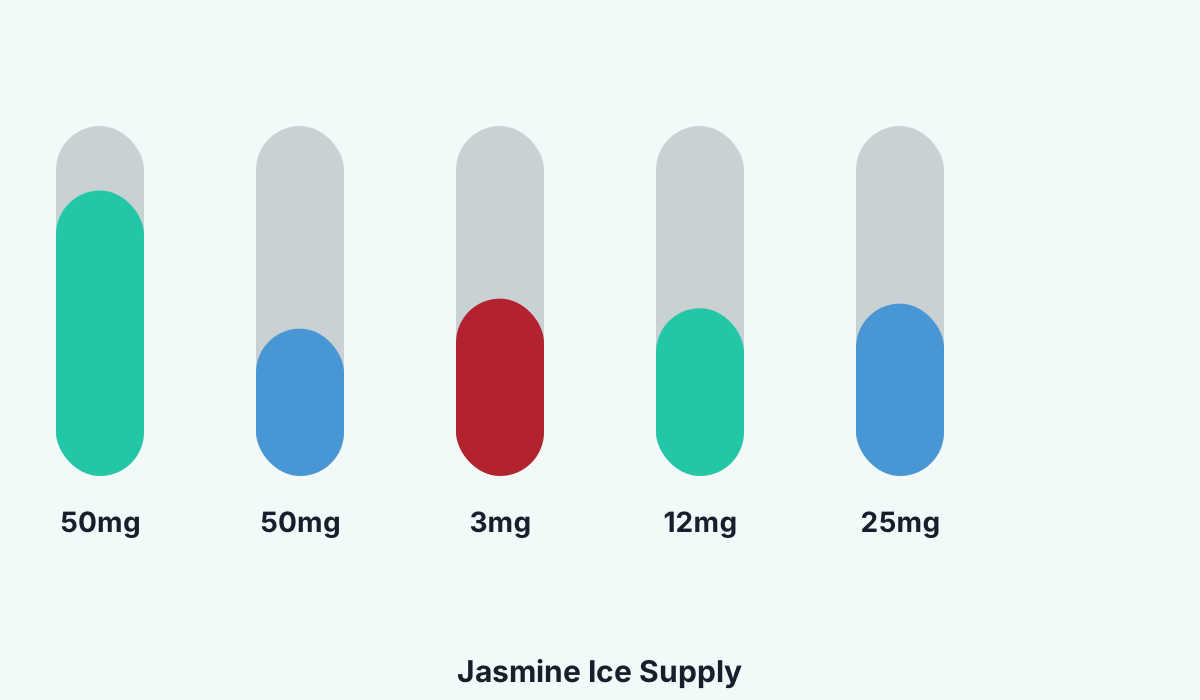
Where Jasmine Ice Sits in the Range
Category planning for jasmine ice works best when you map it against three shopper types: the restocker who already knows what they want, the switcher who wants something stronger, and the explorer who buys on flavour name alone.
One useful exercise: list every jasmine ice line you stock and mark the last date each one sold at full price. Anything without a recent full price sale is taking space from something that would use it better.
Reading a Jasmine Ice Spec Sheet
Pay attention to how a jasmine ice supplier responds when you ask for a tolerance they do not want to commit to. The hesitation is usually more informative than the eventual answer.
| Product category | Refillable kit |
|---|---|
| Resistance band | 1.0 - 1.2 ohm |
| Capacity tolerance | +/- 2% |
| Puff count method | Declared by capacity |
| Master carton | 300 units |
| Carton weight | 7.0 kg |
| Shelf life | 12 months |
| Storage | 15-25 C, dry, away from direct light |
Selling Jasmine Ice at Store Level
Staff knowledge moves jasmine ice more than any fixture. A two minute explanation of the difference between this line and the one next to it converts a browsing shopper into a repeat buyer far more reliably than a discount.
Rotate jasmine ice facing rather than price for the first month. Visibility changes sell-through more reliably than a small discount, and it does not train customers to wait for offers.
How Jasmine Ice Batches Are Checked
The defect rate that matters is the one your customer experiences, not the one the factory reports. Bridge that gap by inspecting the way a customer would open the box, not the way a line worker packs it.
Incoming inspection for jasmine ice is not about opening boxes at random. We weigh a sample of cartons, check batch codes against the production record, run a draw resistance measurement, and log the results so that a complaint three months later can be traced to a specific run.
- Confirm the current customs classification with your own broker.
- Agree the tolerance band in writing before approving artwork.
- Ask how the factory measures puff count, then compare like with like.
- Check carton dimensions against your freight quote before confirming.
- Start with a mixed carton and let your own sell-through decide.
Pricing and Margin
Hold a small jasmine ice buffer in your pricing model for currency movement. A few percent on a container is a real number, and it is easier to plan for than to absorb.
When you model jasmine ice pricing, build in a realistic shrink figure. Even a well run line loses a small percentage to damage, expiry and sampling. Pretending that number is zero is how a healthy looking margin turns negative.
Indicative reference points for planning purposes: entry tier from USD 1.11 per unit at 500 units, mid tier at USD 1.70, and volume tier at USD 0.90 for full container quantities. These figures move with specification, packaging and freight, so treat them as a shape rather than a quote.
Logistics That Protect Margin
Customs classification for jasmine ice varies by market and changes from time to time. We ship with full documentation, but your broker should confirm the current code before your first order rather than after it lands.
Air freight makes sense for a first jasmine ice order when you need to test demand quickly, but almost every steady programme moves to sea freight once volumes stabilise. Planning that switch early avoids a painful margin squeeze later.

Practical Checklist
- Rotate stock by batch code rather than by delivery date.
- Check carton dimensions against your freight quote before confirming.
- Model landed cost, not ex-works price, when comparing quotes.
- Ask how the factory measures puff count, then compare like with like.
- Keep sealed retained samples from every production batch.
- Plan the switch from air to sea freight before you need it.
Frequently Asked Questions
What is the usual minimum order for jasmine ice?
For a standard production run the minimum is normally one master carton per flavour, though mixed cartons can be arranged for a first order. If you are testing the line, ask about a sample pack first and treat the freight as part of your research budget.
What if a batch does not match the sample?
Keep the retained samples from the approval stage. If a delivered batch measurably differs, we compare against the retained set and resolve it against the production record. This is why we insist on sealed retained units from every run.
Do you provide compliance documents?
Every shipment leaves with the documentation set relevant to your market, including batch records and test reports where required. Your local rules still determine what you must file, so confirm those with your broker before import.
Is there support for in-store material?
Yes. Shelf talkers, counter cards and simple planogram suggestions are available for jasmine ice ranges that reach a sensible volume. Most retailers find the plain strength and flavour cards do the most work.
Do you hold stock for regular customers?
For established programmes we can reserve production slots and, in some cases, hold finished jasmine ice stock against a forecast. It removes most of the lead time risk from a reorder and is worth discussing once volumes are stable.
Next Step
Send us your current jasmine ice specification even if you are not planning to move suppliers. A second read of a document you use every month is usually worth the ten minutes.
Related Reading
- Jasmine Ice Escalation Path When Something Goes Wrong — Mixed Cabinets
- Jasmine Ice Copy That Answers Buyer Objections — Before Your Next Order
- Jasmine Ice Warranty Claims Workflow — Real Numbers Only
- Jasmine Ice Copy That Answers Buyer Objections — North America
- Building a Jasmine Ice Catalogue Your Sales Team Can Use — Online Sellers
- Jasmine Ice Batch Recall Traceability in Practice — North America